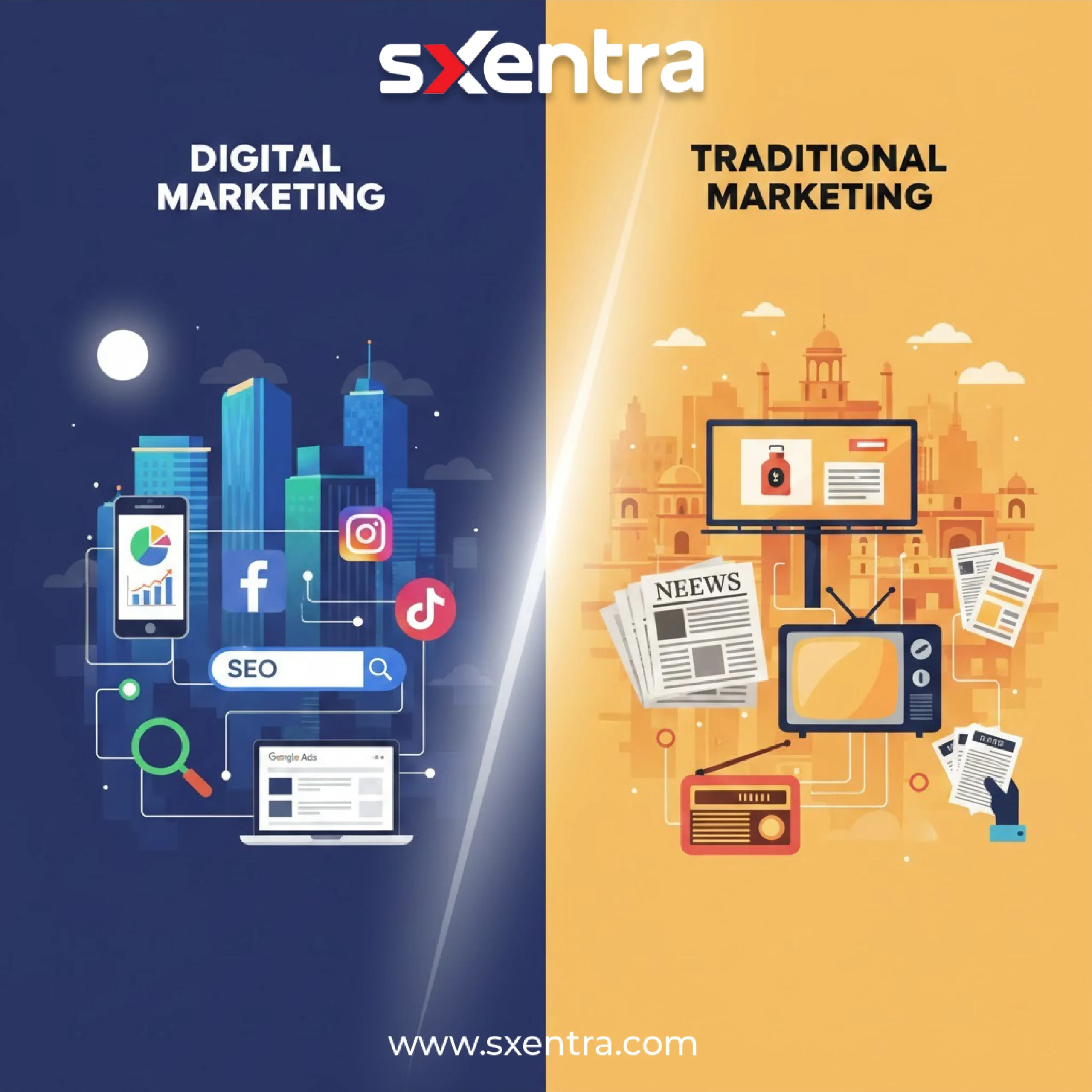
With Pakistan’s rapidly growing business environment, companies often come face-to-face with a question that can significantly influence their success. A question that makes them wonder, what should they rely on, digital marketing vs traditional marketing? Well, undoubtedly, both approaches have proven to be effective in various scenarios. Each one has its pros and cons. But in recent times, the right one can promote long-term growth and deliver desirable outcomes. The decision depends on your audience, budget, and overall business goals. But first, it is crucial to understand the purpose and meaning of these two promotional tactics.
Understanding the Two Approaches
When it comes to promotional strategies via conventional media, all the offline advertising tools are employed. Whether it’s printing in the form of newspapers, magazines, flyers or the media as TV, radio, each one serves the purpose of communicating the brand message effectively. While some find the tangible ways to conduct business a far better approach, others lean towards the progressions that digital marketing has proposed.
The implementation of online methods to reach wider audiences across the globe makes it a strong candidate to win this battle. With social media ruling the world, digital marketing has become a major source of reaching new heights in business. However, businesses in Pakistan also rely on agencies like Sxentra to achieve their goals better.
With the incorporation of websites, search engine optimization (SEO) and paid online ads, businesses leverage a measurable digital promotion strategy. And such a tactic not only expands their reach but also helps them understand what truly resonates with their audience. Whatever the approach is, the goal is to always reach for the strategy that caters to their objectives and delivers actionable insights into audience preferences.
Why Digital Marketing Often Works Better
There is no doubt that traditional ways worked wonders in the olden days. However, it is paramount to move with the changing times and era. And as the market is developing, the strategies need to be updated too. However, when integrated into different businesses, digital outreach has yielded mixed results, keeping the ongoing dilemma very much unresolved. The difference between digital and traditional marketing is always there. But let’s break it down by sizing up online media first.
Number one, it is more cost-effective and flexible. Startups and SMEs can run social media campaigns, content marketing, and Google Ads on modest budgets. With small enterprises, saving money is a top priority, and with online commercialization, they get to start with less and grow gradually.
Another aspect that one-up digital marketing’s game from traditional marketing is its ability to target precisely. With such dynamics, it is quite accessible to reach intended customers based on age, location, interests, or online behavior, ensuring marketing efforts reach people most likely to convert. Traditional dealing, on the other hand, most likely casts a wider net, which can be less efficient.
With its fast and interactive quality, digital platforms deliver rapid action. With social media and Email transactions, a direct communication is formed with the customers, which helps in taking feedback and working on building a stronger relationship. From customer service to inventory tracking, it all just depends on a click of a button. So no hassle or effort is required. And campaigns can also be launched quickly and adjusted as needed. In a country like Pakistan, where social media adoption is surging, this engagement is increasingly valuable.
The outcome of online campaigns can be measurable with digital marketing. Website visits, ad clicks, and overall return on investment (ROI) can be tracked, and that too in real time. This noteworthy ability to monitor performance shifts interest toward online methods of advertising, making them more appealing than traditional approaches.
Why Traditional Marketing Still Matters
Where the traditional marketing challenges navigate high costs and limit targeting options, its significance in the expansion of corporations cannot be ignored. Brands that adopt offline methods often dominate their market niche. It has its own way of accelerating brand awareness.
However, businesses need to evaluate which advertising domain delivers the most engagement for their audience. And speaking of advertisements, many Pakistani consumers, mainly older generations, primarily trust the physical ads rather than digital ones. And that’s when the newspaper enters, it delivers a credible and dependable source of information to them that brings a sense of reliability towards the brand. Local businesses, such as neighborhood stores or service providers, also benefit from these offline campaigns to build familiarity and trust.
For a long-term plan of brand building, traditional forms of commerce bring effective measures that create lasting impressions. The official ads on TV and billboard posters convey an essential value to large-scale campaigns, helping the business to establish itself as a reputable and professional label.
Comparing Digital and Traditional Marketing
Cost: Digital marketing can be started with a smaller budget, whereas traditional marketing normally needs a bigger upfront expenditure.
Reach: Digital approaches can reach a national or even global audience, while traditional methods are more local or regional.
Measurement: It’s easier to measure how well digital campaigns work than it is to measure how well traditional campaigns work.
Engagement: Traditional marketing is generally one-way, but digital marketing lets customers talk to each other.
Flexibility: You can easily change digital campaigns, but once you establish a traditional campaign, it’s harder to do so.
This digital vs traditional marketing comparison allows the business to make a clear decision on choosing the right strategy that aligns with their needs. Also, working with a professional digital marketing agency can deliver maximum impact.
Choosing the Right Channels in Pakistan
There is no denying that selecting the right marketing channels for Pakistani businesses is critical. Digital options include social media platforms like Facebook, Instagram, and TikTok, websites, email campaigns, SEO, and Google Ads. Traditional channels include newspapers, magazines, radio, TV, billboards, and community events. Often, the best results come from a mix of both. For example, a restaurant could run online promotions while also advertising in local newspapers or sponsoring community events. Such a blend primes robust outcomes and helps the enterprise grow fast and steady.
Crafting the Best Strategy
Now it all boils down to which marketing works best in Pakistan. In a country like Pakistan, where starting a business can be quite a process considering regulatory hurdles, market competition, and limited resources, choosing the right technique bolsters brand visibility and strengthens competitive positioning in overcrowded markets. Well, for starters, the technique is majorly based on the type of business you are establishing. On a wider level, it is considered that digital marketing suits startups, SMEs, tech-focused companies, and businesses targeting younger, online-savvy consumers.
Meanwhile, the brands that incline more towards forming a community of trust and credibility with old customers as their target audience can succeed with traditional marketing. But in all fairness, a hybrid approach often delivers the best results. By combining digital and traditional methods, businesses can enjoy the affordability and reach of online campaigns while benefiting from the trust and visibility of offline campaigns. This approach also allows for the Best Digital Marketing Strategy.
The Final Verdict
Digital marketing vs traditional marketing, a debate that often circulates in the business world, has honestly no straight answer. It all comes down to the style, niche and focus of the brand. No marketing technique is universally better, but it’s mostly about which suits your business. And that is the most prominent concept to understand. And for most Pakistani companies, a balanced approach that uses both methods strategically can maximize reach, engagement, and ROI, ensuring sustainable growth in today’s competitive market.
FAQs (Frequently Asked Questions) Answered Below:
Digital marketing is highly effective in Pakistan due to growing internet and social media usage, allowing precise targeting, real-time tracking, and direct audience engagement. Traditional marketing still works, especially for older generations and local audiences. The best approach depends on your business type, audience, and goals, though a hybrid strategy often delivers maximum results.
Digital marketing usually provides a higher ROI because campaigns are measurable, flexible, and cost-efficient. Traditional marketing can boost brand credibility and awareness, but it involves higher costs and limited measurability. For businesses focused on growth and measurable outcomes, digital campaigns often outperform traditional ones.
Yes, digital advertising enables businesses to reach younger, online-savvy audiences efficiently, even on smaller budgets. Startups and SMEs benefit from its flexibility and scalability, while established brands can complement offline campaigns for credibility. A balanced approach combining digital and traditional methods typically yields the best results in Pakistan.